Introduction
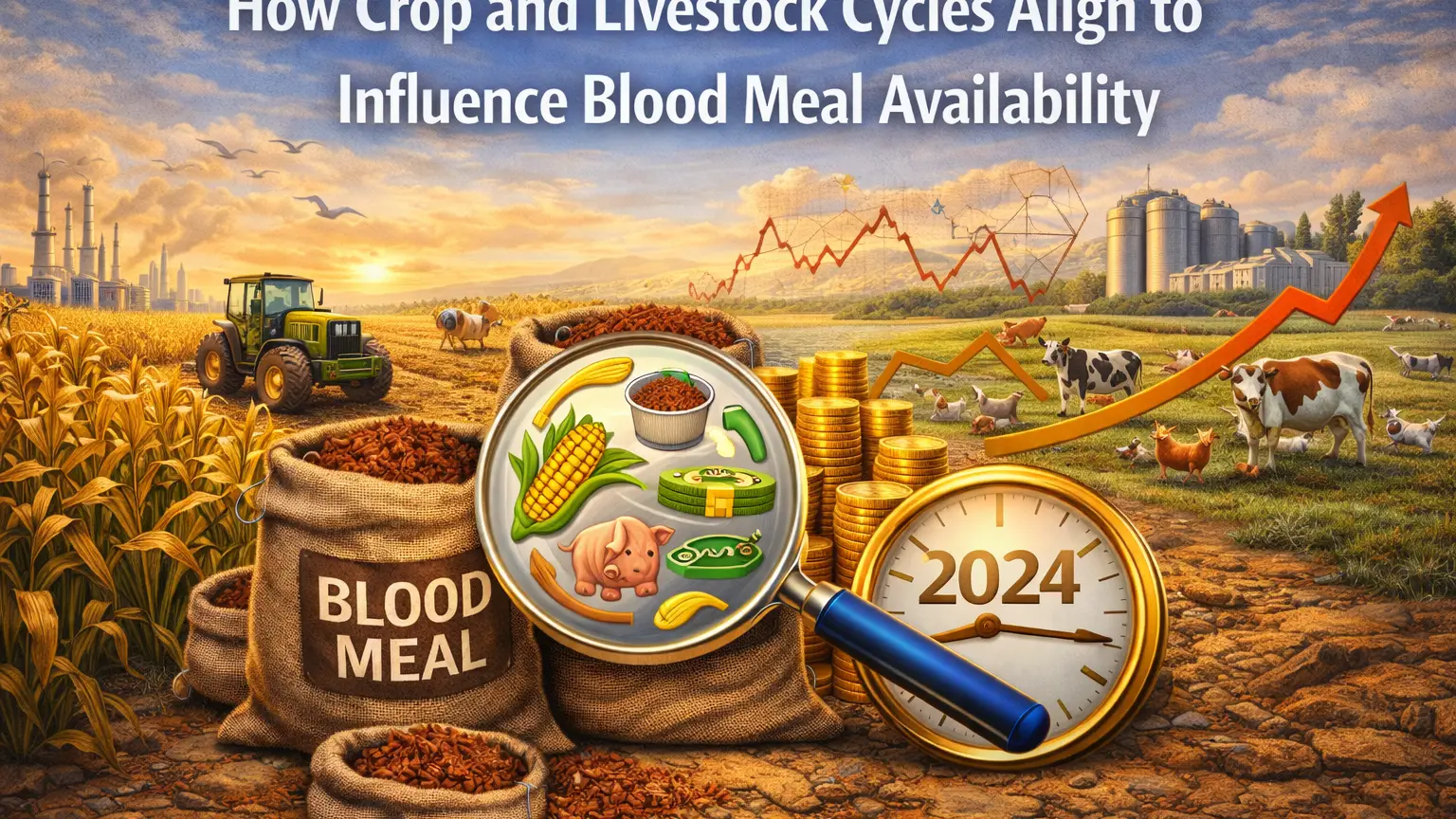
The availability and pricing of blood meal in the United States are closely tied to the natural rhythms of agriculture. Crop planting and harvesting schedules, livestock breeding and slaughter cycles, and processing capacity all interact to determine when blood meal is abundant, scarce, or optimally priced. For agribusinesses, feed formulators, and fertilizer blenders, understanding these cycles is essential for effective sourcing, inventory planning, and cost control.
Because blood meal is a by-product of the meat industry, its supply is driven by livestock slaughter volumes rather than by direct demand from crop or feed markets. Yet, demand for blood meal often peaks at specific points in the crop calendar—such as spring planting in the Midwest or specialty vegetable production in California. This mismatch between biologically driven supply and seasonally driven demand creates volatility that can either be a risk or an opportunity, depending on how well it is managed.
Global distributors like chemtradeasia.com play an important role in smoothing these imbalances. By aggregating blood meal production from multiple regions and coordinating logistics, they help U.S. buyers secure consistent quality and timely deliveries. This article explains how crop and livestock cycles align to influence blood meal availability, and how professional sourcing through platforms such as chemtradeasia.com can help manufacturers, farmers, and feed mills navigate this complex landscape.
Understanding Blood Meal and Its Key Applications
Blood meal is a dry, inert powder made from animal blood—primarily bovine and porcine—collected at slaughterhouses and processed through coagulation, drying, and grinding. The resulting product is extremely rich in protein, typically containing 80–90% crude protein on a dry matter basis, and has a very high nitrogen content, often around 12–14% N. These characteristics make blood meal a valuable ingredient in both animal nutrition and plant nutrition systems.
In animal feed, blood meal is used as a concentrated protein source, particularly in formulations for aquaculture, pet food, and, in some cases, monogastric livestock such as swine and poultry. Its amino acid profile, especially its high lysine content, can complement other protein meals such as soybean meal or fishmeal. However, inclusion rates must be carefully managed due to palatability and digestibility considerations, and compliance with feed safety and regulatory standards is essential.
In crop production, blood meal is widely used as an organic nitrogen fertilizer and soil amendment. Certified organic growers in the United States often rely on blood meal to boost early-season nitrogen availability for high-value crops such as leafy greens, brassicas, and fruiting vegetables. Because blood meal is relatively fast-acting compared with many other organic fertilizers, it is particularly useful for bridging the gap between initial soil mineralization and crop nitrogen demand in the weeks following planting or transplanting.
Crop Cycles in the United States and Their Demand for Blood Meal
U.S. crop cycles are highly seasonal and region-specific, but certain patterns are consistent across the country. In the Corn Belt and much of the Midwest, the primary planting window for corn and soybeans occurs from April to June, while harvest typically runs from September through November. Specialty crops, vegetables, and fruits in states like California, Florida, and Washington follow more diverse and sometimes year-round cycles, but still exhibit strong peaks in planting and fertilization activity.
Demand for blood meal fertilizer typically surges ahead of these planting windows. Organic and specialty crop growers often apply blood meal as a pre-plant or early side-dress nitrogen source. For example, organic vegetable farms in the Northeast and Midwest may plan large purchases of blood meal between February and April to ensure they have enough product on hand for spring field preparation. Similarly, greenhouse and nursery operations may increase blood meal use in potting mixes and topdress applications as they ramp up production in late winter and early spring.
These seasonal demand spikes can strain local supply chains, especially when they coincide with periods of lower animal slaughter or limited processing capacity. Fertilizer blenders and retailers that serve organic and specialty crop markets need to anticipate these cycles and secure contracts or forward purchases in advance. Working with international suppliers such as chemtradeasia.com allows them to access blood meal from multiple origins, reducing the risk of local shortages and price spikes during critical planting windows.
Livestock Production Cycles and Blood Meal Supply Dynamics
Unlike synthetic fertilizers, the supply of blood meal is not simply a function of industrial capacity; it is fundamentally tied to livestock slaughter volumes. In the United States, beef, pork, and poultry production each follow characteristic seasonal patterns. For instance, beef slaughter volumes often peak in late spring and summer as feedlot cattle reach market weight, while hog slaughter can show strong peaks in the fourth quarter due to marketing of pigs farrowed in spring and early summer.
These slaughter cycles translate directly into the availability of raw blood for rendering into blood meal. When slaughter volumes are high, rendering plants and processors can produce more blood meal, often lowering per-unit processing costs and increasing spot market supply. Conversely, during seasonal lulls—such as certain weeks in mid-winter or during herd rebuilding phases—blood meal output may decline, tightening the market. Regulatory factors, plant maintenance shutdowns, and export demand for meat products can further influence how much blood is available for rendering.
Because supply is driven by meat demand rather than fertilizer or feed demand, mismatches frequently occur. For example, in some years, high beef and pork slaughter in summer may coincide with relatively low fertilizer demand after the main planting season, creating an oversupply of blood meal. In other years, disease outbreaks, drought-driven herd liquidation, or processing bottlenecks can sharply reduce slaughter volumes, constraining blood meal output just as farmers are preparing fields. Global trading platforms like chemtradeasia.com help buffer these fluctuations by sourcing from multiple countries and redirecting product flows to where they are most needed.
Benefits and Features of Blood Meal Products from chemtradeasia.com
Professional buyers in the United States increasingly look for reliable, standardized blood meal products that meet strict quality, safety, and documentation requirements. chemtradeasia.com operates as an international chemical and agro-input trading platform, connecting manufacturers of blood meal with feed mills, fertilizer blenders, and distributors worldwide. This model offers several advantages over ad hoc spot purchasing from local sources alone.
First, chemtradeasia.com emphasizes product specifications and consistency. Typical blood meal offerings include detailed parameters such as minimum crude protein (often 80% or higher), moisture content (usually below 10%), ash levels, particle size distribution, and microbiological safety standards. For feed applications, suppliers working with chemtradeasia.com can provide HACCP, GMP, or ISO certifications, as well as compliance documentation with relevant U.S. regulations and, where applicable, organic certification standards for fertilizer use.
Second, the platform supports diverse use cases by offering different grades and packaging options. Fertilizer manufacturers may prefer bulk bags (e.g., 500–1,000 kg big bags) for blending into granular or pelletized products, while smaller organic farms and retail garden markets need 25–50 lb bags. Feed mills may require customized granulation or blending of blood meal with other protein sources. By aggregating offers from multiple producers, chemtradeasia.com can match these varied requirements, enabling U.S. buyers to secure product that aligns with their specific application—whether as a high-nitrogen fertilizer component or as a high-lysine animal feed ingredient.
Third, the international reach of chemtradeasia.com helps stabilize supply across seasons. When U.S. slaughter volumes are low or when domestic rendering capacity is constrained, the platform can source blood meal from regions where livestock cycles are at different phases, or where processing capacity is underutilized. This multi-origin approach reduces the risk of stockouts during peak U.S. planting seasons and can moderate price volatility. For buyers planning annual or multi-season contracts, this translates into more predictable costs and fewer disruptions in production schedules.
Market Trends, Planning, and Risk Management for Blood Meal Users
The U.S. blood meal market is influenced not only by biological cycles but also by macro trends such as the growth of organic agriculture, shifts in meat consumption, and evolving environmental regulations. The USDA has reported steady expansion in certified organic acreage over the past decade, with particular growth in vegetables, fruits, and specialty grains. This trend supports rising demand for organic-compatible nitrogen sources, including blood meal, especially in regions with intensive vegetable production like California’s Central Valley, the Pacific Northwest, and the Northeast.
At the same time, changes in consumer preferences for poultry, pork, or beef can alter slaughter patterns and, by extension, blood meal output. For example, periods of strong poultry demand may not translate into proportional increases in blood meal supply if processing systems focus on different by-products. Additionally, sustainability pressures and stricter waste management regulations encourage better utilization of slaughter by-products, which can increase the share of blood that is captured and rendered into valuable products rather than discarded.
To manage risks associated with these dynamics, professional users of blood meal—such as fertilizer manufacturers, feed formulators, and large-scale organic farms—can adopt several strategies. One is to align purchasing calendars with both crop demand and anticipated livestock supply cycles, using historical slaughter data and market reports to forecast tight or loose periods. Another is to diversify sourcing through partners such as chemtradeasia.com, combining domestic and imported supply to reduce dependence on any single region. Finally, integrating blood meal into broader nutrient and protein strategies—using it alongside other organic fertilizers or protein meals—can provide flexibility when market conditions shift rapidly.
Conclusion
The interaction between crop cycles and livestock production cycles is central to understanding blood meal availability in the United States. While crop demand for blood meal fertilizer tends to peak around planting and intensive growth phases, supply is governed by slaughter volumes linked to meat demand, herd management, and processing capacity. This structural disconnect creates seasonal imbalances that can affect price, quality, and logistics for all stakeholders in the value chain.
By recognizing these patterns, agribusinesses, feed mills, and fertilizer blenders can better anticipate when markets are likely to tighten or loosen, and plan procurement accordingly. Leveraging data on regional cropping calendars, USDA slaughter statistics, and global trade flows enables more informed decisions about inventory levels, contract timing, and product formulation. In this context, access to diversified, well-managed supply channels becomes a strategic asset.
Platforms like chemtradeasia.com help bridge the gap between biological cycles and market needs by aggregating supply from multiple origins, standardizing quality, and offering flexible logistics and packaging options. For U.S. buyers seeking reliable access to high-quality blood meal for both feed and fertilizer applications, partnering with such international suppliers can significantly reduce risk and support long-term, sustainable use of this valuable by-product in modern agricultural systems.
Leave a Comment